Background
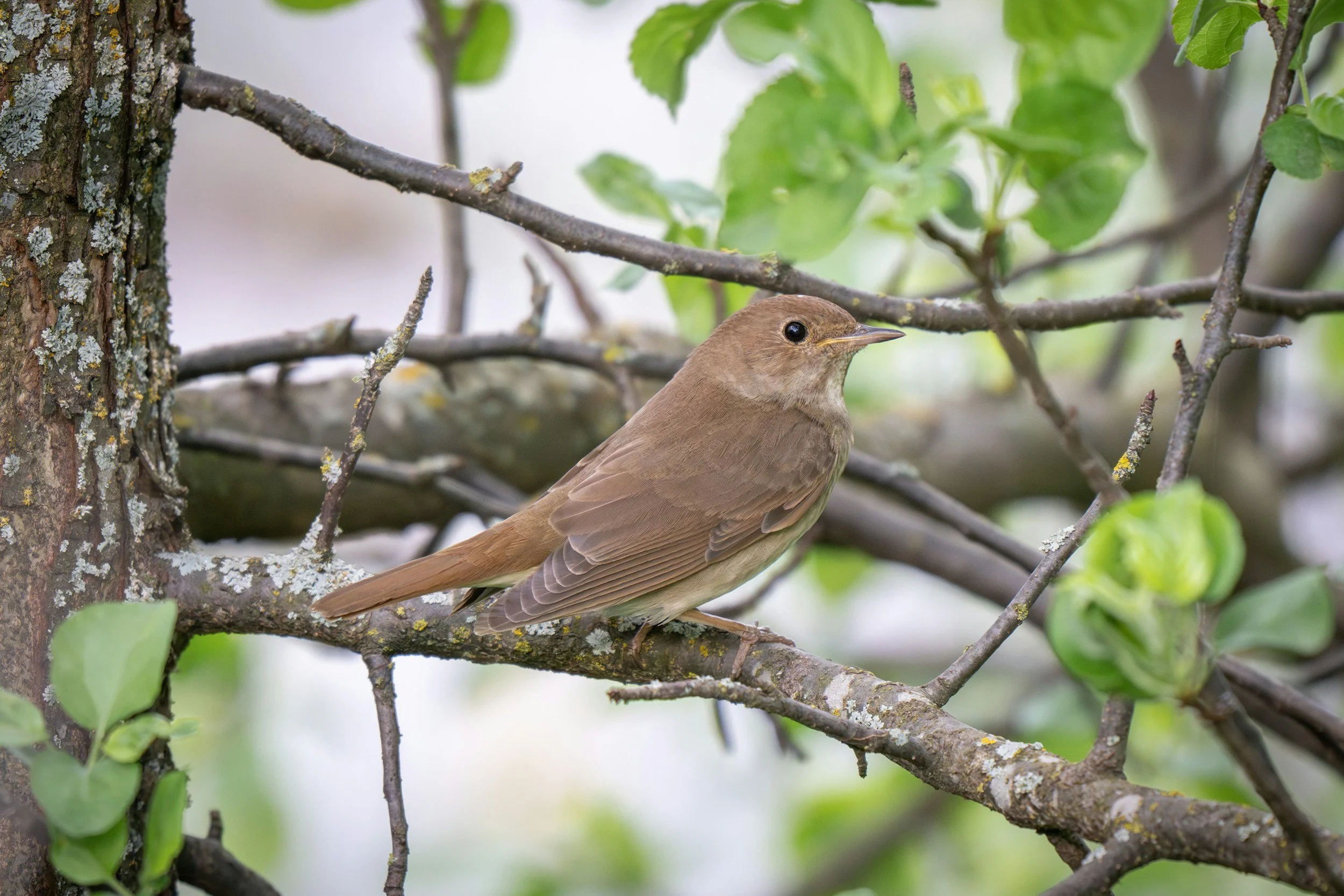
In 2009, scientists fitted tiny geolocators — no larger than a button — to a group of nightingales singing in the Norfolk woodlands. These devices recorded the birds’ position and indeed that autumn, one of these tagged nightingales slipped the borders of an autumnal England, threaded its way over French fields, across the Pyrenees and into Spain. From there it headed west into Portugal, finally crossing the Mediterranean on a journey of thousands of miles to overwinter in the warm embrace of West Africa’s Senegambia region.
The following spring, that same bird returned almost to the very twig where its journey began, allowing researchers to recover the device and unveil its hidden odyssey. This first glimpse of a migratory songbird’s full migratory journey became detailed evidence of the nightingale’s astonishing endurance and a crucial key to understanding the threats it faces on its marathon journey.
This study then became the starting point for imagining our performance, as we asked the question: what was the migration story of an individual nightingale and what human musics would a songbird have heard making this journey at different eras in human history? It also enabled us to pose the question as to what songs about birds and birdsong exist in the human cultures over which she flies on her epic journey south.
the journey south


The Whispering Dome is inspired by the remarkable acoustic properties of the vast dome of St Paul’s Cathedral, which allows whispered messages to be carried clearly across great distances. In a similar way, the dome of the sky through which our nightingale migrates invites us to imagine how human songs, created at one point on the migratory map, might be heard and echoed at other points along her journey.
Musical and cultural exchange has enriched human music-making since the earliest times. The Whispering Dome therefore challenges the notion that Early Music was solely a European endeavour. West African and European cultures have met and influenced one another through intercontinental trade networks from as early as the seventh century. At this time particular maritime routes linked Europe to West African kingdoms with their highly sophisticated cultures and musical traditions.
Musical cultures are not hermetically sealed from one another, and this is a reality that The Whispering Dome celebrates as we imagine the nightingale’s journey unfolding across the centuries, from the medieval period to the present day.
These migrations continue to take place every year, allowing us to weave contemporary sounds and compositions into our story, while also drawing attention to the urgent environmental threats facing the habitats on the way South.
Why ‘The Whispering dome’?